
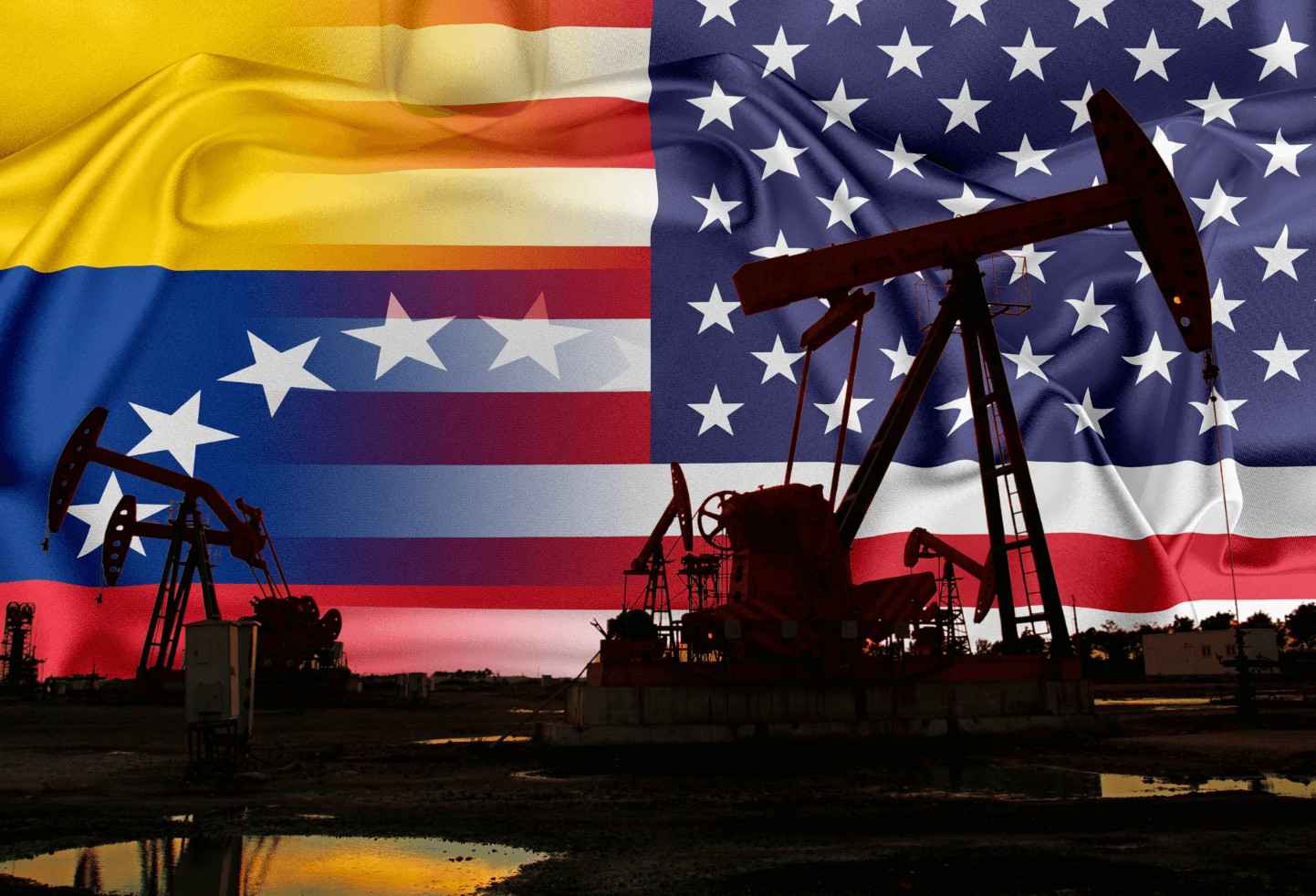
Shares of major US energy companies climbed sharply on Monday as investors reacted to Washington’s move against Venezuela’s leadership, betting that political changes could eventually unlock access to the country’s vast oil reserves.
Chevron led the gains, with its stock opening more than 4% higher after an even stronger rise in pre-market trading. Other large energy producers, including ExxonMobil and ConocoPhillips, also posted solid advances. Market participants appeared to anticipate that a shift in Venezuela’s political landscape could create new opportunities for American firms that have long been restricted by sanctions and instability.
The developments also pushed investors toward assets traditionally seen as safe during periods of uncertainty. Gold prices rose nearly 2% in early Asian trading, reaching around $4,412 an ounce, while silver jumped more than 3%. Analysts said the move reflected growing concerns about geopolitical risks following the US intervention.
Precious metals have performed strongly over the past year, with gold recording its best annual gain since 1979 after climbing more than 60%. The rally has been supported by expectations of lower interest rates, continued buying by central banks, and persistent worries over global economic and political stability.
Oil markets, meanwhile, showed a more measured response. Crude prices fluctuated as traders assessed whether the situation in Venezuela would have any near-term impact on global supply. Brent crude edged higher by just over 1% to about $61.50 a barrel, remaining well below the peaks seen in previous years. Analysts noted that ample global production and spare capacity were likely to limit any immediate price surge.
Chevron currently stands out as the only major US oil company with ongoing operations in Venezuela, although its activities have been constrained for years. Spanish energy group Repsol, one of the few other Western firms still present in the country, also saw its shares rise. Oil services companies benefited as well, with Halliburton posting one of the strongest gains in the sector.
US President Donald Trump has said Washington intends to take control of Venezuela’s oil sector during what he described as a transition period, arguing that American companies could help restore production and infrastructure. However, industry experts cautioned that any meaningful revival of Venezuela’s oil output would be a long and costly process.
Years of underinvestment, mismanagement and sanctions have left the country’s energy infrastructure in poor condition. Analysts estimate that billions of dollars would be required to repair refineries, pipelines and export facilities before production could increase significantly. Venezuela’s crude output, once among the highest in the world, now represents roughly 1% of global supply.
Former BP chief executive Lord Browne said that while some short-term gains might be possible, rebuilding the industry would demand extensive expertise, capital and time. He warned that output could even decline further during any restructuring phase before improvements are seen.
Beyond energy markets, the US action also boosted defence stocks, particularly in Europe. Shares of major defence manufacturers rose as investors speculated that heightened international tensions could lead to increased military spending. In London, BAE Systems advanced strongly, while Germany’s Rheinmetall posted even larger gains.
Market analysts said defence companies often attract investor interest during periods of geopolitical strain, as governments may prioritise security and defence budgets. Mining stocks also moved higher, tracking the rise in precious metal prices.
Despite the dramatic political developments, broader stock markets showed resilience. Asian equities mostly advanced, with Japan’s Nikkei index posting a strong gain on its first trading day of the year. Data showing stabilisation in manufacturing activity supported sentiment, while markets in South Korea and China also edged higher.
Investment strategists said the steady performance suggested that investors currently view the fallout from events in Venezuela as contained, at least for now. While uncertainty remains high, markets appear to be weighing the risks against the likelihood that global supply chains and economic growth will remain largely unaffected in the short term.