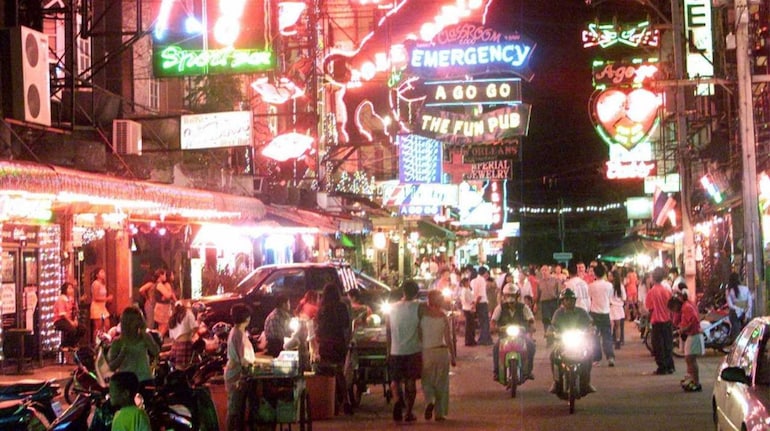
Thailand Nightlife: Thailand’s nightlife and tourism industry are facing a major jolt following the announcement of a new rule coming into effect this weekend. Under the extensive amendments to the Alcoholic Beverage Control Act, anyone caught drinking or serving alcohol during restricted hours or in prohibited areas will face a hefty fine of 10,000 Thai Baht (around ₹27,000).
Effective from November 8, this amended law marks Thailand’s strictest alcohol enforcement regulation since 1972. It not only targets bars and retail vendors but also shifts the legal responsibility directly to drinkers.
For a country heavily dependent on tourism, this move has raised concerns among hotel owners, restaurant operators, and even lawmakers, who fear that the regulation could drive away tourists and cause significant losses to small businesses.
What Is the New Rule?
Thailand has long enforced restrictions on alcohol sales — typically banning sales at supermarkets and retail stores between 2 p.m. and 5 p.m. However, the latest amendment shifts focus from sellers to consumers.
This means that if a customer legally buys a beer at 1:59 p.m. but is still drinking it at 2:05 p.m., both the customer and the establishment could face penalties.
Chanon Koetcharoen, president of the Thai Restaurant Association, said, “The new rules will negatively affect restaurants because now the customer has become the one ‘restricted.’ If someone buys a beer at 1:59 but keeps drinking until 2:05, it will be considered a violation. This will hinder the restaurant industry’s growth.”
Concerns About Misuse and Political Backlash
Beyond economic concerns, many fear that vague rules could open the door for abuse and corruption. A Bangkok-based restaurant owner warned that officials might exploit the law for personal gain, fining customers or businesses unfairly.
Meanwhile, Taopiphop Limjittrakorn, a Member of Parliament from the Move Forward Party and a vocal supporter of alcohol liberalization, called the amendment “a step backward.”
He argued, “Alcohol sales should be allowed 24/7.” Limjittrakorn also expressed concerns that these restrictions could confuse foreign visitors and damage Thailand’s long-standing reputation for hospitality and tourism.