
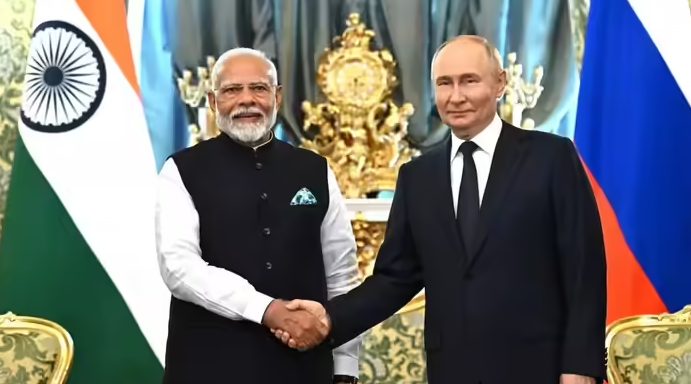
India and Russia Agree Long-Term Plan, Target Major Trade Boost by 2030
India and Russia have finalised a series of agreements across key sectors as both nations outlined an ambitious roadmap for cooperation until 2030. The announcement was made on Thursday during a joint press briefing addressed by Indian Prime Minister Narendra Modi and Russian President Vladimir Putin.
The agreements follow extensive discussions on economic, strategic and diplomatic issues, reaffirming what both leaders described as a long-standing and resilient partnership.
President Putin said Russia was prepared to ensure a continuous and reliable supply of fuel to support India’s growing economy.
Key Agreements Signed
The two countries concluded deals in areas including fertilisers, food security, healthcare, migration and maritime logistics.
Some major points include:
- Energy Supply: Russia has committed to uninterrupted energy deliveries to India.
- Industrial Cooperation: Indian firms signed an agreement with Russia’s URALCHEM to establish a urea production plant in Russia.
- Food Safety and Consumer Standards: India’s FSSAI and Russia’s federal consumer watchdog signed a cooperation framework.
- Healthcare: A memorandum of understanding was signed to strengthen collaboration in medical sciences and public health services.
- Ports and Shipping: An MoU was signed to expand maritime logistics cooperation.
- Migration and Mobility: Both sides agreed to streamline travel and cross-border workforce movement.
Free Trade Agreement Under Consideration
Prime Minister Modi highlighted the depth of the India-Russia partnership, calling it “rooted in mutual trust and respect” and strong enough to withstand geopolitical shifts.
He added that concluding a Free Trade Agreement with the Eurasian Economic Union remained a priority, with negotiations progressing.
Payments in National Currencies
President Putin said both countries were increasingly moving towards settling bilateral trade using national currencies. He also noted discussions aimed at increasing the annual trade volume to $100 billion.